Showing posts with label Identity. Show all posts

8.28.2008

Dream Lapse

Lost in thought, walking to the places I have to go to during no particular day, I feel like I'm in a racial vacuum...

During this moment, I'm completely unaware of myself as a social being--that is, of my labels as a woman, Latina, etc. I'm not really interacting with others, I'm just passing through blurs of people that I pay no attention to as I cross streets and pass buildings. I'm not even conscious of my walking. I'm practically in a dream.

It's a strange thing, that lapse in time that occurs when I'm getting from one place to another. It's not that I'm not appreciative of the day--I notice the green leaves and blue skies I pass along the way. I'm still adhering to the laws of society, but in auto-pilot mode.

I can never consciously experience these racially-vacuous dream lapses, I can only reflect upon them afterward. I wake up from my dream and I'm left with only a few remnants of the event.

I can't assume you go through this moment, but it feels so natural that I wonder if others do go through it. My question is, is this a way of attempting to escape the burden of racialized identity, or is it rather a brief return to a natural state before and beyond social identity? Both and neither?

In short, I think moments like these matter because they show that I cannot be my social self every single second of the day. Race, gender, sexuality, class. They are not a part of the fiber of my being, they are only roles I assume when I interact with others.

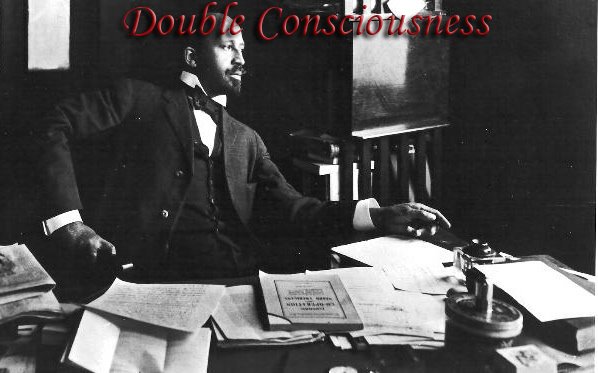
In this way, double consciousness can also be the literal state of the term--being conscious of your consciousness. That is, being aware of your awareness as a socialized being intersected by race, class and gender.

...The moment I hear "hi" from a friend who sees me walking by, I suddenly notice the dripping paint of society all over me. I suddenly become aware of my name, place, and time in society. No longer just a body, but now back to Sara, back to Latina in 2008, back to California-born daughter of Argentine immigrants.

6.06.2008

"Me" and Consciousness

Who am I? To you, I mean. Who am I, to you? I sit here writing, assuming a sort of authority to write, spewing my words into the depths of the internet for anyone to find. I know who I am, but how does that come across in the internet?

I recently received an email attacking my "about me" section on my personal blogger profile. Weird, because it is senseless, I can't really understand it. But in spite of this, I was struck by the email because it seems to be less an attack upon the issues I discuss and more of an attack on me. It is about me.

Subject: Your opinion "about me"

I sort of do not understand the premise of your comments. How are you a citizen of the United States of America yet feel foreign and then state that you are for those who voices are silent. In America opportunity is greater than anything. For those who are supposedly “silent” with opportunity they speak. Cubans are silent because no matter how much they scream and cry and disapprove the have no opportunity to go nowhere. Its sad to hear that So, if someone bombed the united states of America whose side would you be on since you feel foreign? And you really do teach rhetoric. Seems like you would have more regard for the country that gave you the ability to speak as crazy as you’d like without repercussions. Regardless of our problems here the opportunities that are afforded to us give us the voice in and of itself so there is no silence.

Why do I have to explain myself to you? An honest question, not a biting one. On the one hand, I could say, "you don't know me." Thus forcing dialogue to a close. On the other hand, I could say, "here is my life story," and spend hours trying to explain myself in vain.

Here's the beautiful thing: the reason I shouldn't have to explain myself is because I'm not writing to prove myself (how could I when my idea of myself is constantly changing?). I am writing to explore my own consciousness as a Latina, but more importantly, to reach out to others with the hope that what I say might affect them in any way. So if my "opinion" about myself seems unpatriotic or something, then that's only because you have a very different idea of what is patriotic than me.

What's the point of blogging here, then? I write because consciousness (and double consciousness) is idealistically about infinite awareness. It is about never cementing oneself in ideas about the world and its people because the dynamics of such are always changing. Consciousness is to me a contradictory state--you acquire it by never accomplishing it.

You are conscious by always realizing that you do not know everything--that your consciousness must always be expanding because there is always something you are not conscious of. I don't know who I am to you, or who you are to me. I just love the fact that we don't have to know each other to rework our respective consciousnesses here on this blog.

5.05.2008

Straight People Are Not Gay? It's Less Obvious Than It Sounds

We define "gay" as "not straight," but never the other way around. It seems silly to say this, but by admitting that straight people are not gay, one can easily embrace a form of double consciousness.

Double consciousness is about understanding that anyone who is "different" is different from something that has been accepted as normal. What is accepted as normal in Western society is the white, male heterosexual. I say "accepted as normal" because it is only an idea that has been accepted as true in our society--but it is not a truth. It is not normal.

This is a picture worth a hard look:


The story behind this image hit me as a great way to illuminate the burden of double consciousness. This is the car of a homosexual white female, Erin Davies, whose car was originally silver. One day she found that someone had vandalized it by spraying the homophobic slur in red paint, and rather than have it removed, she left it on. Now you can follow her on her website fagbug.com.

Her decision to sport the hate crime was met with strong opposition and strong support as she journeyed across the country to document reactions to her car. She had even re-painted the hateful words after several people have anonymously attempted to remove the bright red message. Recently, she had the entire car professionally painted with the rainbow colors and the name given to her by the original vandals.

This car makes obvious the identity of difference. You would never find someone's car vandalized with the word "straight" because the straight identity is widely accepted as natural...which leads to the logical conclusion that gay is unnatural; false even.

What is normal? There is no normal, because when you say someone is different, it goes both ways. The "gay" is different from the "straight," yes. But the "straight" is different from the "gay" too.

I cannot end without emphasizing the importance of recognizing that double consciousness involves many differences all at once. In this case, we're only looking at a homosexual, white female--who is different from the straight white male and the homosexual white male. But it gets even messier when you look at a homosexual, black female for example.

We can't get stuck on singular terms. We've gotta see that everyone is made up of endless differences--we are all intersected by differences in class, race, gender, and more.

4.24.2008

Come On America, Arizona's SB 1108 Is A Racist Bill

"I'm gonna show you WHO's BOSS"

To some people it may have seemed like the fight was against undocumented immigrants. They are "illegals," "aliens," "criminals" overrunning our nation.

Well for me that was never true. From my own experience, it's basically a fight against culture, language, and color. The anti-immigrant sentiment that is so strong today, as it has been throughout our history as the United Sates, is about hatred. It's about racism, colonial power, capitalist interest, and everything else you can think of.

Man, I am just sick and tired of this. I am sick and tired of this game that a lot of "Americans" are playing. This is not about immigration.

YOU KNOW WHY? THIS IS WHY: Arizona state lawmakers and their evil SB 1108 bill is about killing Mexican-American/Chican@/Latin@ identity. To say this bill is fueled by merely anti-immigrant sentiment is to confuse the real issue here--because anti-immigrant sentiment has always been about anti-Hispanic sentiment (hey I don't like calling it Hispanic, but that's what it is to them)

You can look up several news articles on the bill, but here's one:

Some state lawmakers are again sticking their noses where they don't belong and trying to tell educators what should or shouldn't be taught in public schools.

The Legislature is attempting to usurp the decision-making responsibilities of local school boards and is perpetuating lies and creating divisions among Arizonans by pushing a bill that seeks to end programs like Raza Studies in the Tucson Unified School District. The bill would deny state funding to schools whose courses "denigrate American values and the teachings of Western civilization."

Whatever that means.

Howard Fischer of Capitol Media Services reported in Thursday's Star that the bill, SB 1108, is aimed at MEChA, the Movimiento Estudiantil Chicano de Aztlán, a student group that state Rep. Russell Pearce, R-Mesa, describes as racist.

Raza Studies has also drawn the ire of anti-immigrant-rights activists and last year was criticized by state schools superintendent Tom Horne, who said the program was promoting "ethnic chauvinism."

Horne investigated the program and then quietly dropped his inquiry.

Pearce, one of the state's most strident opponents of illegal immigration, appears to have bought into the notion that MEChA followers want to take over the southwestern United States, which was part of Mexico.

That's hogwash.

The myth is perpetrated by right-wing anti-immigrant-rights groups like American Border Patrol and their Web sites. The lie gained new life over the last couple of years as the illegal-immigration debate reached a boiling point.

...What lawmakers like Pearce ignore is that programs like Raza Studies and MEChA help many Hispanic students excel.

By learning more about their race's culture, the students become engaged in the education process and go on to become better taxpaying members of society.

OH I'M SORRY AMERICA. I'm sorry that because world history is OBVIOUSLY distorted in every damn aspect of our education to favor learning about white people, I have to oppress my own identity and educate myself about subjects that are not only irrelevant to my culture and diversity, but are also not reflective of true history.

It wasn't until college that I finally came to understand the dimensions of my Latina identity. It wasn't until college that I learned about the atrocities of white America's past and present--the genocides, the school of the Americas, the coups, the SLAVERY, the exploitation, the National Origins Quota, the "treaty" of Guadalupe Hidalgo, the promises of reparations, the diseased blankets, Thanksgiving, Africa, Guatemala, the list goes on...

I AM NOT ANTI-AMERICAN. The REAL anti-Americans are those people who RESIST accepting that AMERICAN MEANS MANY LANGUAGES,CULTURES,RACES,AND HISTORIES. American is NOT CITIZEN--AMERICAN IS PERSONHOOD. I AM AMERICAN BECAUSE I AM A LATINA BORN IN THE UNITED STATES who is an active member of society, respects her fellow Americans (documented or not), and upholds her values of tolerance and human rights for all. I recognize that HISTORY is not ONE STORY, BUT MANY. Our country does not have a history, as our euro-centric society would have it, our country has HISTORIES--good and bad--of peoples from all perspective.

I am tired of being taught one perspective. What Ethnic studies does, let alone Chican@ studies, is give us ANOTHER perspective--one that often reflects that of us "Hispanics" who are trying to learn something other than the white history. LETS KEEP TEACHING WHITE HISTORY BUT NOT WHITE HISTORY ALONE. Let's teach many histories.

With all my heart, with all my soul, I beg others to join me and many others in saying: AMERICA, THIS BILL IS RACIST, XENOPHOBIC, AND UNCONSTITUTIONAL.
4.17.2008

Obama, 'Black Man' With Authority

What do you think when you hear about the latest critique of Obama? From remarks about his "lack of experience," to his pastor's preachings, and now to his "bitter" remarks about xenophobic Americans, Obama's racialized identity is implicated in every remark made of him.

When we look at criticism of Obama, there is a lot going on there, but you just can't separate it from the fact that he is a man of color, and mixed at that.

David K. Shipler has written a very insightful piece in the Los Angeles Times, giving us context by which we can understand the deeper meaning of what's going on here. He writes,
Obama has made some real missteps, including his remark last week that "bitter" small-town Americans facing economic hardship and government indifference "cling to guns or religion or antipathy to people who aren't like them." Perhaps he was being more sociological than political, and more sympathetic than condescending. But when his opponents branded him an elitist and an outsider, his race made it easier to drive a wedge between him and the white, rural voters he has courted. As an African American, he was supposedly looking down from a place he didn't belong and looking in from a distance he could not cross.

This could not happen as dramatically were it not for embedded racial attitudes. "Elitist" is another word for "arrogant," which is another word for "uppity," that old calumny applied to blacks who stood up for themselves.

At the bottom of the American psyche, race is still about power, and blacks who move up risk triggering discomfort among some whites. I've met black men who, when stopped by white cops at night, think the best protection is to act dumb and deferential.

Furthermore, casting Obama as "out of touch" plays harmoniously with the traditional notion of blacks as "others" at the edge of the mainstream, separate from the whole. Despite his ability to articulate the frustration and yearning of broad segments of Americans, his "otherness" has been highlighted effectively by right-wingers who harp on his Kenyan father and spread false rumors that he's a clandestine Muslim.

In a country so changed that a biracial man who is considered black has a shot at the presidency, the subterranean biases are much less discernible now than when the Rev. Martin Luther King Jr. was assassinated. They are subtle, unacknowledged and unacceptable in polite company. But they lurk below, lending resonance to the criticisms of Obama. Black professionals know the double standard. They are often labeled negatively for traits deemed positive in whites: A white is assertive, a black is aggressive; a white is resolute, a black is pushy; a white is candid, a black is abrasive; a white is independent, a black is not a team player. Prejudice is a shape shifter, adapting to acceptable forms.

So although Obama's brilliance defies the stubborn stereotype of African Americans as unintelligent, there is a companion to that image -- doubts about blacks' true capabilities -- that may heighten concerns about his inexperience. Through the racial lens, a defect can be enlarged into a disability. He is "not ready," a phrase employed often when blacks are up for promotion.

4.03.2008

James Bond Filming Clashes With Chilean Community

Here's some weird news from Chile: during the filming of a scene in Chile for the upcoming James Bond film, Quantum of Solace, a local Chilean mayor angrily drove a vehicle into the set. Mayor Carlos López, of Baquedano, Chile, was protesting the filiming for its negative impact on the community.Tom Leonard from Telegraph.co.uk reports:

Mr Lopez was arrested and briefly detained for what police called "causing public disorder". It was claimed that he almost ran over two people at the town's railway station as he sped onto the set.

He had been protesting at what he called an excessive police presence in Baquedano and objecting to Chilean soil being used as a stand in for neighbouring Bolivia.

Baquedano lies in a mining region around the city of Antofagasta in the far north of the country. It was forcibly annexed by Chile from Bolivia in the late 19th century - an issue that continues to divide the two countries.

...Mr Lopez said yesterday: "For a town that has just 1,000 residents, sending in special forces and water cannon, preventing people from walking in the street, reminded me of the worst of the Pinochet years.

So what's the problem? This situation just comes off to me like another one of those big western capitalist F.U.'s to the other guys. Sure the filming was permitted and legal, but that doesn't rid it of all evil. I mean, all those foreign companies set up in Jamaica are there legally too...but their presence there has greatly harmed the national sovereignty of the country. When Jamaica finally gained its independence, like many other countries, it faced overwhelming debt. As a result, the country turned to international lending organizations for help. However, the loans came with conditions that forced Jamaica into submission under foreign companies. Ultimately, the country's own resources and monetary system were completely undermined by foreign imports, and the country ultimately fell at the mercy of foreign Western capitalist nations.

Specifically, I'm trying to get at the issue of Western capitalist interests overpowering the national sovereignty of other countries. I'm talking about a blatant disregard for the culture, history, and identities of the locals who become unavoidably involved in Western capitalist affairs in such countries. In the specifics of the James Bond incident, I'm trying to point out that the filming of this movie cannot simply take place without imposing on the relations of the Chilean and Bolivian people implicated by the filming controversy.

These kinds of filmings are not uncommon, but we have to realize that taking such projects into a foreign country does not have the same effect as filming on some Los Angeles high school campus for some Hollywood teen movie. There is a heavy racial, cultural, and international clash that takes place--which the general Western capitalist public takes for granted.

6.21.2007

The International Committee for Black Authenticity...
and learning to self actualize

Hello. My name is Macha and I feel like asking the asking the question (and maybe ranting a little), about who decides who is and isn’t Black. Originally I thought it was meant to personal choice of self identification. Something that your family shares with you about your heritage and past. Sometimes, I’ll admit, it is based on varying shades of skin color.

I watched the movie Gandhi the other day, and Mohandas Gandhi was thrown off a train in South Africa for being Black in first class. The republican party has made an executive decision that Barack Obama doesn’t count as Black because he’s actually “hafrican". Although somehow he was Black enough for Rush Limbaugh to sing “Barack the magic Negro”. How confusing. Once at work I was told I only count as half, not a whole Black person, (they never bothered to ask what my ‘make-up was’ they just assumed because I am light) and yet I endure all the “you’re Black, you understand…” comments. A friend of mine, Joey, received an award in 8th grade, it was given to him with great intentions I’m sure, but Joey received The Gift of Blackness. It came complete on a plaque, from the hands of White school administrators. Maybe it was just in case he forgot.

As a scientist it’s hard for me to understand how being Black is quantitative, yet it is. Early in my life, like grade school, I was taught that Black was something you were born as hence skin color, and no matter the shade any pigmentation you had labeled you Black. I was ok with this, as it makes logical sense. As I grew into a teen, I learned from both Blacks and Whites, that there was such a thing as Not-Black-Enough or Too-Black. This is a bit perplexing when you’re at a self defining age. This Black Authenticity wasn’t solely based on skin color, although at first it was, the lighter you were the less Black you were, but then it morphed into a social standard. This is when I started asking myself who set this social standard and what was its purpose. In my mid teens not being Black enough meant that you were probably light, listened to music other than rap, had at least a few non-Black friends, strait hair, and in my case, God forbid, a vegetarian. Too-Black was a caricature of what White people think Blacks are; Dark skin, kinky hair, opinionated, loud, intimidating, only associate with other Blacks and you blamed everything on the man. In this world there is no middle ground. Do you see my dilemma? This definition of what was authentically Black (‘Too-Black’ or ‘Not-Black-Enough) does nothing but cause infighting and confusion. And worse, it makes us blind to the image that we hold in the world in general. We can become so absorbed in being enough or too much that we fail to realize that we still stand as a whole body. It’s the ultimate weapon against Black people as a whole. United we fight, divided we fall.

I realized one day not only was I being played, thinking maybe I wasn’t Black enough, I had let someone else define what being Black meant to me. Blasphemy! It wasn’t even Blacks who defined it. My parents did a great job, but they were competing with millions of media messages and the day to day of, well... White people. I said to myself one day, Do you see how stupid this is? Someone else has defined Blackness for you. I continued with questions like, who decides this? Is there a committee somewhere in the world that defines Blackness? How come I’m not on it? Are Black people making this decision, or are our decisions being influenced without us even realizing it since birth? Is this why from the time we’re little we’re told to straiten our hair? Is this why there are no dark haired Black women in pop music or television? Maybe that's why every light skinned girl on American Idol has to press her hair by the end of the show. How come we’re so quick to throw on a blonde weave and contacts? Why do we think rapping about bitches and drugs is ok when we can walk outside and see what that music is doing to the self esteem of our brothers and sisters? Why is R. Kelly ok and Michael Jackson is not? Why is this message SO important for me to hear and WHO is sending it to me? And it’s not just true for us, it’s everywhere.

Maybe you sitting there, you’re not Mexican enough, Chinese enough, Persian enough, hey maybe not even Irish enough. Did you let someone else define your identity? Did you even realize you let them? My parents taught me that you never have to explain yourself to anyone but yourself, and it took a lot of self actualizing to wash all the media versions of myself out of my head. We live in a world where ‘the one drop rule’ is very much in effect, to ignore it is to ignore the sun in the morning sky. How can we let a person or media question who we are at the core and not say anything? How can we not arrive at our own conclusions? We have to say something, and by saying something we are defining who we are. We are in control of the self definition we want in the world, and we all as individuals need to take these steps. Being Black to me is much more than listening to Beyonce, perming my hair and eating pork rinds. If that sounds insulting to you it should, but think about it. You define you, no one else.

Peace.
Macha H.

4.16.2007

"i wanna be white"

I was browsing through YouTube a couple of days ago and came across this video of a four or five-year-old Mexican girl talking about how anything that isn't white is "gay." This rather disturbing clip illustrates some of the damaging affects of white supremacy and heterosexism on young people of color.


Sound familiar? (See also: No! I'm Not Black! I'm White!!, A Girl Like Me, Black Dolls/White Dolls and Issues in Identity)

3.24.2007

"NO! I'M NOT BLACK! I'M WHITE!!"

Last night (well, technically this morning) at my work I was loading an Arizona trailer with my friend and co-worker Wendy. It was a slow night so we were able to talk about a lot of things: from music, to relationships, to school, language, and so on. During the conversation it somehow got steered toward race (probably my doing). Wendy, 34 and Nicaraguan (she moved her permanently as a teenager), told me how it was very hard for her to explain to her youngest daughter (who's Latino and Black, but looks very much Black) that she wasn't white. She said that one day her daughter told her that she was white and Wendy, probably very carefully, had to tell her daughter that she wasn't white, but instead very Black, and Latino as well.

"No! I'm not Black!" She yelled. "I'm white! I'm white!" She was about four years old when this happened. She now realizes (she around eight or nine I think) that she is Latino and Black but this gives us a window, and the opportunity, to see how pervasive racism is in our society.

Growing up (and still today) all she saw in the media was white faces. White faces on billboards, white faces in movies (Disney no doubt), white faces on the sides of buses, taxi cab signs, buildings, commercials, and TV shows. All she probably saw was white faces. If she saw any type of people of color at all in the media it was probably on debates about whether or not Latinos should be U.S. citizens or a rise in the rate of homicides and crime in Oakland's Black community. So all she probably ever saw relating to Black people were (and still are) negative stereotypes. All she probably ever saw of white people were positive stereotypes: the leading role, the princess, the beauty queen, etc.

So it would make perfect sense for someone who is aware and conscious of today's ills (and someone who is of color) to see why she reacted the way she did and why she yelled out. "No! I'm not Black!"

Another friend of mine told me he cried when he found out he wasn't white because not being white meant not being "normal" since all he saw in the media (and in his school) were white faces. Another one of my friends didn't know he wasn't white until he was five or six, and that fact, he told me, confused the Hell out of him.

So if you ask me how deep racism and white cultural supremacy runs throughout Western society and in America. It's that deep.

Image From:
Gone Movie

3.20.2007

Navajo and Native American Identity

Below are excerpts from an article from the Native American scholarly journal Wicazo Sa Review.

Lee, Lloyd. "Navajo Cultural Identity: What Can the Navajo Nation Bring to the American Indian Identity Discussion Table?" Wicazo Sa Review 21, no. 2 (Fall 2006): 79-103.

American Indian identity in the twenty - first century has become an engaging topic. Recently, discussions on Ward Churchill’s racial background became a “hotbed” issue on the national scene. A few Native nations, such as the Pechanga and Isleta Pueblo, have disenrolled members. Scholars such as Circe Strum, in Blood Politics: Race, Culture, and Identity in the Cherokee Nation of Oklahoma, and Eva Marie Garroutte, in Real Indians: Identity and Survival of Native America, have examined American Indian identity. More attention is being devoted to understanding the implications of racial identity in Native nations.
...
The history of the Navajo Nation documents the continuing growth and change of the people. Navajo people have adapted to their physical and social environment since creation, and the enormous amount of American infl uence and intrusion on the Navajo way of life is a study that cannot be ignored. As a citizen of the Navajo Nation, I
contribute this article to the continuing discussion on Indian identity. I review a selection of literature on Navajo society, the historical understandings of what it meant to be Navajo and how that has changed, and call to the Navajo Nation to rethink and restructure current enrollment standards. I use textual analysis and ethnographic interviews for my approach to analyzing Navajo identity. Although this overview does not provide all the angles of Navajo identity, it will be a first step to understanding how selected citizens of the Navajo Nation view identity and how those individuals acknowledge historical cultural identity markers in their definitions of twenty - first century Navajo identity.
The following short excerpts are about Navajo identity viewed through the eyes of Navajo and non-Navajo identity:

It is important to note that most scholarship on Navajo culture is written by non - Navajos, but outside scholarship can observe only so much of the anthropological aspects of Navajo society. Non - Navajo scholars observed and recorded Navajo cultural practices with the belief that the Navajo would disappear and that they were salvaging what was left of a dying culture. This paternalistic relationship is problematic for several reasons, including a continued colonialist attitude by non - Navajo scholars toward Navajo culture and society, subjective judgment of Navajo cultural practices, and the many texts that provide only a superficial representation of Navajo culture and society...

For the purposes of this essay, I have chosen to discuss texts that focus on worldview. The Navajo worldview is based on the philosophical principles of Hozho and Sa’ah Naaghai Bik’eh Hozhoon (hereafter, SNBH [my bold]), which outline epistemological concepts that are the essence of the Navajo way of life. Generally speaking, Navajo people are supposed to live a life based on the concept of Hozho and SNBH...

The Navajo worldview originates from the creation stories told to the people. These origin stories are the foundational base of the Navajo society and way of life and are passed down so that the Navajo can have a connection to the Diyin Dine’é (Holy People). The Navajo worldview translates to Navajo cultural identity. Generally speaking, the stories, values, and beliefs Navajo people are taught at a young age formulate a Navajo person’s approach to life...

Navajo scholar Miranda Haskie wrote her dissertation, Preserving a Culture: Practicing the Navajo Principles of Hozho doo K’é
, on her grandfather, Albert “Chic” Sandoval Sr., and his accomplishments in life. Haskie developed a grounded theory describing ways people from
culturally diverse backgrounds can preserve their culture despite their integration into a dominant society...She states, "In order to survive the integration with a dominant culture, the secondary culture must meet certain conditions. When these conditions are met, people successfully preserve their culture. These conditions include practicing Hozho doo K’é, becoming educated, utilizing tools (products of preservation, such as customs that have been recorded on tape and in books), practicing leadership, changing, and adapting.
...
Maureen Trudelle Schwarz, a non - Navajo scholar, examines how present - day Navajos cope with life’s challenges. Her book, Navajo Lifeways: Contemporary Issues, Ancient Knowledge, provides another perspective on practicing Navajo cultural identity for the present. In Navajo
Lifeways, Schwarz examines six recent events and issues and how Navajos cope using their historical beliefs and values. The six events and issues are the hantavirus outbreak in 1993, the Navajo relocation from Black Mesa from 1974 to 1999, the Holy Visit from Navajo deities in 1996, the discovery of snakes in the ladies’ room in the Navajo Nation tribal government’s offi ces in the mid - 1990s, Navajo women’s use of emotional expressions as protest action, and the problem of alcoholism on the reservation. Schwarz examines each, particularly focusing on how Navajo people confronted them based on the oral stories and the values and beliefs they were taught.
...
By relying on the stories told to the people for generations, the Navajo people were able
to adapt and confront the six challenges discussed in Schwarz’s book. But what about Navajo people who do not hold those values and beliefs or those who were never taught them? How would they cope? Signifi cantly, Schwarz does not discuss this. Her omission connotes that “authentic” Navajos are connected to these stories. The strength of Navajo society lies in the diversity of individual Navajos. The “nonauthentic” voice must be included.
...
Clyde Kluckhohn, a non - Navajo, who extensively studied Navajo people and culture, and wrote several articles and texts on Navajo life, philosophy, and culture. The root of Kluckhohn’s work is a discussion and analysis of Navajo ideas about life and how to live it, and how those ideas have been affected by Euro - American society. His article “The Philosophy of the Navaho Indians,” published in 1959, contributes to the non - Navajo understanding of Hozho and SNBH and attempts to produce an understanding of Navajo philosophy.
In it Kluckhohn describes the worldview espoused by Navajo intellectuals, medicine men or healers, which is followed by common Navajo people.
...
The latter segment of Kluckhohn’s essay focuses on the impact of Euro - American culture on these Navajo premises, ethical codes, and values. This section provides an adequate analysis on how Euro-American values and beliefs infl uenced Navajo people and how they were drifting away from the philosophical standards described earlier in the essay. For instance, Kluckhohn writes, “The introduction of the white idea of individualism without the checks and balances that accompany it leads to the failure of collective or cooperative action of every sort.”10 While this segment of the essay is short, his interpretations of how Euro - American society was changing Navajo values and beliefs foretell developments in Navajo cultural identity in the twenty-first century.
...
Wilson Aronilth Jr.’s Foundation of Culture stands in stark contrast to Kluckhohn’s and Farella’s works. Aronilth, a Diné and an instructor at Diné College, wrote this book in the 1980s as a teaching guide for his Diné philosophy courses. The text emphasizes the basic tribal values in Navajo society, today and in the past, including the value of clans as a social system, the philosophy of duality, Navajo origin, and ceremonial participation. The Foundation of Navajo Culture has information on the creation of the Navajo calendar, the origin and story of the Navajo language, the Navajo way of learning, the foundation and story of the Navajo clan system, and how the Navajo clans are related.
...
Navajo scholar Evangeline Parsons - Yazzie examines this in her essay “Perceptions of Selected Navajo Elders Regarding Navajo Language Attrition.” Parsons - Yazzie’s article probes issues related to the decline of the Navajo language. She examines monolingual Diné-speaking elders’ isolation and loneliness, the loss of social control in mixed families of speakers and nonspeakers of Diné, and the loss of the language that leads to the loss of the culture. Parsons - Yazzie interviewed Navajo elders concerned about the loss of the Diné language. Elders view the Diné language as a language of compassion, unifi cation, and love, and feel that the younger Navajo generations are turning their backs on their language and culture. One elder states that belief with the following translation, "In order to know Navajo values, one has to know the
Navajo language. It is the parents’ responsibility to teach the young and it is the grandparents’ role to reinforce Navajo language learning in their grandchildren. How will our Navajo youth know what is good, what is right, and what is accepted, if they do not know their language well
enough to accept the teachings of their elders?"
...
Is it the younger generation’s fault that they don’t know the language,or is it the entire Navajo society? Or a third party? Does it matter who is at fault? Or should revitalizing the language be the utmost concern? The elders stress how Navajo children are not learning the Diné language and values. According to Parsons - Yazzie, the children see the Navajo way of life led by an elder as boring, unhappy, and miserable. Navajo children, according to the elders, are too confused and have too many thoughts. This is in reference to some Navajo children who choose to integrate other cultures’ products into their own personal identity (i.e. listening to rap or hip hop music)...

The Diné language is alive today, but there are fewer Navajo speakers than thirty or fi fty years ago. The loss of the language is part of Navajo cultural identity in the twenty - fi rst century. That language loss does not mean non–Navajo speakers are not Navajos; rather it will
be up to the Navajo people to decide whether they want their language to continue, or pass on like other historical Navajo cultural products.
The author than goes into historical Diné identity:
Current Navajo enrollment standards do not include historical Navajo cultural identity markers. The Navajo Nation defi nes their citizenry through blood quantum and lineal descent. The enrollment criteria consist of the following: (1) person’s name appears on the offi cial roll of the Navajo tribe maintained by the Bureau of Indian Affairs; (2) person with at least one - fourth degree Navajo blood, but who has not previously enrolled as a member of the tribe, is eligible for tribal membership and enrollment; (3) children born to any enrolled member of
the Navajo tribe shall automatically become members of the Navajo tribe and shall be enrolled, provided they are at least one - fourth degree Navajo blood. If the enrollment criteria does not include historical Navajo cultural identity markers, can the enrollment standards be changed to include historical cultural identity markers in the future?...

Historical Navajo cultural identity derives from the creation stories of the Navajo people. From these stories, Navajos know how they came to be and where they have been. Land is central to the stories...
...
Diné teacher Wilson Aronilth Jr. describes a person’s role in life, “Our role in life is to have love, faith, hope, preparation and plans. Why? Because this way our tasks are fi nished in beauty.”21 Historical Navajo people did not distinguish non - Navajo people based on race but rather on what experience the Navajo people had with them. For example, Naakaii refers to the Mexican people and the English translation is “those who roam around.” In other words, the Navajo people described the behaviors of the people, not their blood or race. So, has Navajo cultural identity changed since European contact? It has changed to include new cultural productions such as speaking new words to describe new tangible products like televisions and telephones. Although a few Navajo people still practice historical Navajo cultural identity, many do not and so enrollment requirements do not contain these historical
identity markers. However, the younger Navajo generation is learning to recognize the historical cultural identity markers of worldview, land, language, and kinship...
The author than goes over historical Navajo cultural identity markers in the 21st century:
In my research, I studied the connections between Navajo people, the choices each individual makes whether to epitomize their cultural identity or not, the infl uence their college education has in their identity formation, and what defi nes Navajo cultural identity. I interviewed five men and seven women between the ages of twenty-four and thirty-seven. Some live or had lived on the reservation, while others live in, or grew up in, an urban setting. All participants were college graduates or college students. All spoke English, and three also spoke fluent Diné.

He never questioned his Navajo identity until he started taking college courses. He had lived in a small reservation town where no one questioned Navajo identity. He thought he was similar to all Navajos in that he was making a living and being with his family. In college, he took
Native American studies classes and began to ask critical and thought-provoking questions on the history of colonialism in the United States and the use of blood quantum as an identity marker. College changed Dee’s mindset to such an extent that he began to examine situations
on the reservations for the fi rst time. Why did Native people live in poverty? Why did Native people not have basic living services such as running water and electricity? He had not questioned his standard of living when he was younger. He began to read and learn about Hozho and SNBH. When I asked about his thoughts on the Navajo worldview, he focused on the importance of praying. He said, “Way of thinking, ways of getting up in the morning, getting up before the sun comes up, praying.”...

Language has become pivotal to the people because everything about Navajo society, such as the prayers, songs, ceremonies, and rituals, is based on how the people interact, analyze, and synthesize the way of life through language. Studies by Deborah House, in Language Shift among the Navajos: Identity Politics and Cultural Continuity, Evangeline Parsons - Yazzie, and others document the Navajo language shift. Even though there is a language shift occurring at this moment, all of my research participants agree, even those who do not speak Diné, that
language is still a critical cultural identity marker for the people.
...
Steve noted that early in his life he was ashamed of who he was and of his family. He says, “At one point, I remember I didn’t want to be Navajo and that was because I was embarrassed of the kind of lifestyle and the kind of dysfunctional family that I was raised in comparison to other [non - Indian] families that I had met while growing up.” This is not unusual: some Navajos are ashamed of their cultural identity. They try to conceal it because they do not have certain material goods such as a luxury car, a computer, a cell phone, or other items that distinguish socioeconomic status; or because they do have the socio economic ills such as no viable job, no college education, or are or have family members who are alcoholics. Steve and the other participants realize the importance of the Diné language to Navajo cultural identity today and the need to learn it.
Conluding the paper:
The Navajo Nation brings to the American Indian identity discussion table its own distinct view of identity based on cultural features such as worldview, language, kinship, land, pride, and respect. None of these historical and current cultural identity markers are written in the enrollment criteria; Navajo enrollment continues to use race and blood. As its population increases and its society changes, can the Navajo Nation continue to be distinctly Navajo with its current enrollment criteria?
...
Each individual wants to speak the Diné language. Each thinks it important to know who your relatives are and how each human being is connected with all relations on earth and in the universe. They take pride in being Navajo and respect their ancestors’ tenacity to survive.
Perhaps Navajo poet Luci Tapahonso expresses the understanding of Navajo identity best. In Saanii Dahaatal: The Women Are Singing, "who I am is my mother, her mother, and my great - grandmother, Kinlichiinii Bitsi."

Tapahonso realized her connection to all Navajo women in her family. That connection defi nes Navajo identity for her. In the future, Navajo enrollment criteria must be changed to incorporate Tapahonso’s perspective and Garroutte’s radical indigenism. Only the Navajo people will be able to change the enrollment standards and refl ect historical Navajo identity in the twenty - fi rst century and beyond. If we choose to ignore how Navajo enrollment is established, we will begin the process of conforming to American ideas of belonging and their defi nition of our identity. Does the Navajo Nation want this for future generations? I hope not.
Image From:
The Native Blog

3.07.2007

Echo of Bullets

I did a multimedia piece on the crustcore Marxist Asian band Echo of Bullets for [X]press online. I did the pictures for the piece and came up with the idea. Hope you all enjoy it. The three minute piece can be found here.

2.01.2007

A Girl Like Me

About a month ago, Jack had done a post entitled Black Dolls/White Dolls and Issues in Identity where he talks about how white standards of beauty, which dominate the mainstream, impact people of color. Some of the information he cites comes from a documentary called A Girl Like Me. As it turns out, this short is actually available on youtube so I've posted it here it is for your enjoyment! Check it out. It's only about seven minutes long. (Thanks, Shamiya for telling me about this!)

1.01.2007

Black Dolls/White Dolls and Issues in Identity

I recently came across a blog called Black Intellects when I was looking for issues on white privilege. I came across a post on her blog called "A Girl Like Me" about issues of identity in America and the pervasivness of white culture in mainstream society and how it affects people of color. Many whites can't understand how privileged they are because they are not people of color and because they are effected by their white world view. But the reality of white privilege is very real for millions of people (actually, everyone) across America. In the blog Mary M. writes:
in the mid-1980s Hofstra University researchers Darlene Powell-Hopson and Sharon Gopaul-McNicol found that two-thirds of black children in the United States and three-quarters of black children in Trinidad still preferred white dolls over black ones.
Also:
When asked to choose the brown doll, the white doll, or no doll at all, ten of the sixteen students selected the white doll as the “nice” doll. Eleven labeled the brown doll as the “bad” doll. Even though the children had demonstrated that they could distinguish between the white and brown dolls...
These posts show the reality of what it's like growing up in America as a person of color. While much of the classic Jim Crow racism of the past doesn't exists any more, thanks to strong efforts by people of color during the Civil Rights movement and before then, racism still exists, people are still being exploited, and many are affected by the prevelence of "white is right" in society. Mary than goes on to go over a dialouge between a researcher and a young Black girl

“And why does that look bad?”

“Because she’s Black,” the little girl answers emphatically.

“And why is this the nice doll?” the voice continues.

“Because she’s White.”

“And can you give me the doll that looks like you?”

The little girl hesitates for a split second before handing over the Black doll that she has just designated as the uglier one.

Image From:
filo sofa