6.10.2007

Latinos Equal Terrorists?

I was just listening to Latino USA on NPR and they were talking about the recent immigrant reform bills floating around Congress and anti-immigrant groups like the Minute Men.

It was reported that the Minute Men (What? No women?) claimed that over 40,000 Americans have been killed by "illegal" immigrants. I went to their website to check it out and sure enough I found this:
“Since 9/11 alone, about 45,000 U.S. residents have been killed in action via homicide or manslaughter at the hands of illegal aliens, and about another quarter of a million to 300,000 have been wounded,” Gilchrist told Cybercast News Service in an interview.

Gilchrist said he used the terms “killed in action” and “wounded” intentionally “because essentially, we have a war going on here that’s not a declared war, that’s not a conventional war, but it is costing us 9,000 lives a year.”
I haven't seen any real statistical data on this but to equate undocumented immigration with war and combat is pretty mind boggling.

In the report it was also stated that the Minute Men claim that our "open" boarders are paving the way for terrorists. But a interviewee on the program said that between 2002 (or 2004, memory hazy, will update soon though) and 2006 around 8,000 undocumented immigrants were detained by the U.S. and out of those 8,000 only 12-15 were suspected of having slight and remote ties with terrorism (terrorism in the broad sense I'm sure). So that's basically .18%. Hmmm...Some crazy and real threat we have there. Anyways.

When looking critically at issues such as immigration one has to look behind the rhetoric and use history as a guide to see how much of these fears are real and legit and how much stems from racism and the fear of people of color and non-English speakers. In my opinion (more on this latter) this is the true driving factor behind such insane rhetoric from anti-immigrant groups such as the Minute Men (see "Anti-Immigration Groups Cross Breeding With Hate Groups")

6.07.2007

Listen to the Fascist Sing


Listen to the facist sing
"Take hope here
War is elsewhere
You were chosen
This is God's land
Soon we'll be free
Of blot and mixture
Seeds planted by our Forefathers hand"
A mass of promises
Begin to rupture
Like the pockets Of the new world kings
Like swollen stomachs In Appalachia
Like the priest that fucked you As he whispered holy things
A mass of tears have transform to stones now
Sharpened on suffering
And woven into the slings
Hope lies in the rubble of this rich fortress
Taking today what tomorrow never brings
-"Ashes in the Fall" by Rage Against the Machine

6.04.2007

Latino on Black Ethnic Cleansing in L.A.? Not So

Tarso Luís Ramos writes an interesting article on the supposed "ethnic cleansing" of Blacks by Latino gang members in L.A. However, as Ramos reports, things aren't always as they seem. Especially when "the vast majority of gang crime has been and remains intra-racial—Latino on Latino and Black on Black—a fact often lost in the jumble of crime statistics, and media coverage that highlights racial conflict between communities of color."

Here are some excerpts from the article below:

“We need to go on the offensive to put an end to this idea of ethnic cleansing in L.A.,” declares Noreen McClendon, executive director of Concerned Citizens of South Central Los Angeles. “It is not happening.”

McClendon—an African American who serves as vice president of operations for the Watts Gang Task Force—is upset about a recent deluge of news stories claiming that Latinos are “ethnically cleansing” their African American neighbors in southern California. The reports, which McClendon characterizes as dangerously misleading, have circulated widely in print, broadcast, and Web media, generating alarm in civil rights circles and unrestrained glee in those of anti-immigrant activists and white supremacists. In McClendon’s view, all this hype obscures some basic realities: “Gangs kill each other. Gangs kill innocent people.” The ethnic cleansing label, she says, “is blown so far out of proportion” with the facts on the ground.

...

In January that phrase, which had previously appeared on gang-watch websites, was suddenly everywhere following the Los Angeles Times’ publication of an editorial by Rutgers Law Professor Tanya K. Hernandez. Referencing the trial of Avenues 43 members, Hernandez pronounced Green’s murder “a manifestation of an increasingly common trend: Latino ethnic cleansing of African Americans from multiracial neighborhoods.” Rather than explain this bombshell of a conclusion, Hernandez used the Green murder as an opportunity to present her thesis that Latino prejudices against African Americans often have roots in immigrants’ countries of origin–a subject on which she has published scholarly articles. This argument deserves consideration, but in presenting it as context for the charge of ethnic cleansing, Hernandez provided ammunition for those who would argue that Latinos, as a generalized whole, are a threat to African Americans and that the danger posed by new (read “illegal”) immigrants can be lethal. Ironically, the people actually charged with the Green, Bowser, and Wilson murders were members of Chicano gangs whose L.A. roots go back many decades.
Originally read on New American Media.

Image From:
Hip-Hop Music Classic

6.03.2007

A Response to a Response to a Post About an Opinion Piece

Sean Maher, the subject of a content analysis by me and a blog by Christine Ferrer posted a response on his blog and took issue with my analysis of his opinion piece and with our views.

In it Maher wrote:
Back to the diversity issue: I offered Thomas a chance to continue the public debate by dedicating a page of our special graduation issue to a dialogue between the two of us. I recognized that my column had unfortunately been run without any counterargument, and I thought we'd all look more thoughtful and mature by correcting that. He seemed happy with the suggestion, and while we didn't end up actually completing that project, I felt like the issue had been settled now that he and I were on happy terms.

Of course, I was wrong about that.
[Que dramatic music here.]

Maher took issue with many things I wrote in my content analysis and stated:
I didn't expect to run my column without controversy or debate - it's a galvanizing, inflammatory subject for a lot of people - but whatever the strengths and weaknesses of my arguments, I'm amazed by how quickly and vehemently the reaction involved personal attacks. The rampant assumption (and subsequent condemnation) regarding my personal history, in Stephens' article especially, is alarming.
Personal attacks? Looking over my article I actually saw very little personal attacks of the ad hominem type. I did open up with this however:
Diversity making a white hetero-sexual male squeamish, hmmm...Well, nothing new there really.
Funny? Maybe. Ad hominem, eh, not really. Of course, there was this:
Yet Maher doesn't see this, and justifiably so. He doesn't see this because he is white. His white skin is his shield. As the co-editor of the paper Ian Thomas told Maher in a rage on Thursday. "I don't mean to insult you buy you are a white heterosexual male!" In society's eyes that is not an insult but a "complement" and for Maher to not see it as otherwise shows us his complete obliviousness to his white privilege, his male privilege, and his heterosexual privilege.
Pointing out one's white privilege (that all white people obviously have) in my opinion is not an ad hominem attack but instead pointing out a reality in this racialized country. However Maher sees it (I'm assuming) as an attack on his charecter. This can actually be another example of white privilege since pointing out white privilege is met with cries of "character assassination," "personal attacks," and even "reverse racism," and is never seen as a critical judgement on a harsh reality on is almost never seen as (by the person in question) a call to critical self-reflection.

Let's see, what else did I write, ah yes, this one:
Maher's life has been shaped by the fact that he is white. He can say such things as "what defines us...are our thoughts, our feelings, and our actions" and that what diversity is, "is a wealth of individual beliefs" because Maher is a white male.
And:
He's blind to the fact that the people around him are all white. He's blind to this not because of any moral superiority to someone who would see all of the white faces around him but instead is blind because he fails to look at his own privilege.
And a little sprinkle of this:
Sadly, with thinking such as his, [X]Press will only continue to contribute to the everyday acceptance of white privilege, white supremacy, and the ignoring of the racial realities of America.
Now (concerning the last quote) that's an ad hominem attack! All though, not so much of an attack as my harsh conclusion and prediction of Maher's future tenure if he continues to think the way he does and is only stated at the end of a near 4,000 word analysis.

Maher didn't say much in his response really (unless he's planning a much larger one). He went on to say:
I neither regret nor rescind my arguments, nor do I find much in the Double Consciousness critiques that truly, substantively addresses the stance I've taken - they're rife with ad hominem attacks and straw man fallacies, reflecting less that they understood my ideas than that a white man's thoughts on diversity issues may strike some audiences emotionally before they're absorbed intellectually.
Ad hominem, according to Webster's Dictionary, is:
1: Appealing to feelings or prejudices rather than intellect
2: marked by or being an attack on an opponent's character rather than by an answer to the contentions made.
And Wikipedia:
An ad hominem argument, also known as argumentum ad hominem (Latin: "argument to the person", "argument against the man") consists of replying to an argument or factual claim by attacking or appealing to the person making the argument or claim, rather than by addressing the substance of the argument or producing evidence against the claim. It is most commonly used to refer specifically to the ad hominem abusive, or argumentum ad personam, which consists of criticizing or personally attacking an argument's proponent in an attempt to discredit that argument.
Straw Man fallacies you say?

Webster states:
1: a weak or imaginary opposition (as an argument or adversary) set up only to be easily confuted
2: a person set up to serve as a cover for a usually questionable transaction.
Wikipedia states:
A straw man argument is an informal fallacy based on misrepresentation of an opponent's position. To "set up a straw man" or "set up a straw-man argument" is to create a position that is easy to refute, then attribute that position to the opponent. A straw-man argument can be a successful rhetorical technique (that is, it may succeed in persuading people) but it is in fact a misleading fallacy, because the opponent's actual argument has not been refuted.

Its name is derived from the practice of using straw men in combat training. In such training, a scarecrow is made in the image of the enemy with the single intent of attacking it. It is occasionally called a straw dog fallacy, scarecrow argument, or wooden dummy argument.
In reality, I'd argue, my content analysis actually had very little in ad hominem attacks and straw man arguments. In fact, there a few times I do actually agree Maher to a certain extent:
I agree with Maher on this point. It's an inexact science to look at photos and guess what someone's race is. This is the reality of race, race doesn't exist (see "What Is Race?"), it is not biological, it's sociological.

...

It's an encouraging thing that Maher knows that race and culture are two different things. But, at the same time, in America, race and culture are so intertwined it's impossible to set aside the two in most people's minds.
I even agree, to a certain extent, with his views on diversity of opinion:
Maher sees diversity as differences in beliefs, perspectives, and behaviors, and not as cultural and racial. Yet one gets different opinions, beliefs, perspectives, and behaviors when one has a culturally and racially diverse social group. Of course, I also accept his argument that if I had friends who were of every different race and gender and all thought the same (such as if I was Bill O'Reilly and my friends were Michelle Malkin, Thomas Sowell, Condaleeza Rice, Ann Coulter, and Alberto Gonzales) I wouldn't be doing a service to my personal growth.
I even criticize myself and use my self as an example in not realizing one's privileges.

I also clarify by what I mean by racism:
By racism I don't mean the classical sense of the word but the contemporary sense of the word. For more detail and discussion see "Racism and White Supremacy."


My piece is actually quite well thought out and written in a way that tries to backup my arguments with real evidence and not dominated with attacks on Maher's character. It seems to me that Maher sees my pointing out his whiteness as an attack on his character which actually points out his continued blindness to his white privilege.

Maher writes:
nowhere in my column did I make or imply the blanket argument that Race Does Not Matter Ever, though this stand is attributed to me as the point from which both writers begin their debate.


Actually I never stated that Maher said "Race does not matter ever." I've looked through it and haven't seen that implied, nor did I mean it to be implied in such a simplistic way. But the cusp of his argument is actually that argument. It's the thinking behind the words. Maher never specifically said that "race does not matter ever" but the reasons why his opinion piece came about and the actual underlying argument (whether conscious or not) in this society is that very statement. We did a content analysis on race and Maher wrote an opinion piece about diversity of opinions mattering and not diversity of race. Yet that argument lends itself to ignoring the realities of race and the realities of white privilege. Those whom are ignorant of their white privilege, such as Maher (Oh snap! An ad hominem!), tend to use that line of thinking, and that line of thinking ignores the reality of race in America and the overall Western world.

And speaking of ad hominems, Maher wrote:
reflecting less that they understood my ideas than that a white man's thoughts on diversity issues may strike some audiences emotionally before they're absorbed intellectually.


I'm being accused at not looking critically at his piece and not "absorbing it intellectually" because, you know, his argument is sooooooo over my head and is sooooo intellectual (oh woe is me). Of course, my entire content analysis was an exercising in analyzing Maher's words critically and in an intelectual way with very little in ad hominem attacks and with no straw man arguments.

My argument was a critique of a line of thinking and of whiteness and not of Maher's character (quite the nice guy in my opinion). Numerous times I give histories of whiteness and examples of white privilege and contemporary racist thought and of uncritical thinking. I even link previous blogs in my content analysis in order to further clarify my position.

Maher than quips:
The lesson as I see it from here is not to shy from saying things because people may get pissed: after all, pissed off people can be a lot of fun, and their writing can make working on the paper more engaging and exciting.


I guess people whom are critical of Maher's point of view are just invitations to have quite a jolly good time instead of looking at the accusation and argument in hand and looking critically at one's self.

There is much more I would like to say but in reality it was already said in my previous blog on Maher's opinion piece. I was talking with my friend (and fellow Double Consciousness editor) Carlo Montemayor stating that I was looking forward to Maher's response but that it would probably have little in the way of true analysis of my piece and in reality wouldn't actually address any of the issues that I brought up. Sadly my predictions came true (Boo-yah! Chalk up another ad hominem for Jack!) since the cusp of his response was:
I didn't expect to run my column without controversy or debate - it's a galvanizing, inflammatory subject for a lot of people - but whatever the strengths and weaknesses of my arguments, I'm amazed by how quickly and vehemently the reaction involved personal attacks. The rampant assumption (and subsequent condemnation) regarding my personal history, in Stephens' article especially, is alarming.

Diversity is a dense and difficult issue, and I don't claim to have everything figured out; the debate rages on, as I know it must, and I expect I've still much to learn.

But I neither regret nor rescind my arguments, nor do I find much in the Double Consciousness critiques that truly, substantively addresses the stance I've taken - they're rife with ad hominem attacks and straw man fallacies, reflecting less that they understood my ideas than that a white man's thoughts on diversity issues may strike some audiences emotionally before they're absorbed intellectually. After all, nowhere in my column did I make or imply the blanket argument that Race Does Not Matter Ever, though this stand is attributed to me as the point from which both writers begin their debate.


Again I end with:
Sadly, with thinking such as his, [X]Press will only continue to contribute to the everyday acceptance of white privilege, white supremacy, and the ignoring of the racial realities of America.

5.30.2007

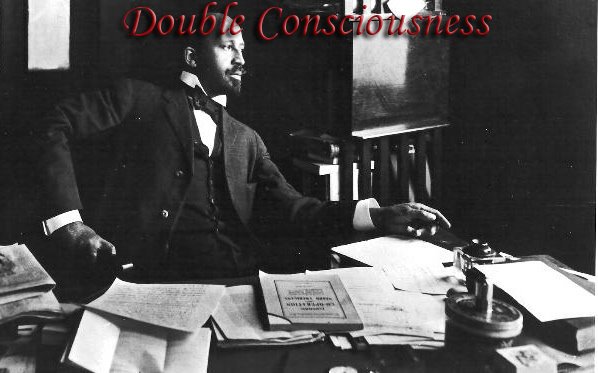
W.E.B. Du Bois and Double Consciousness

In honor of Du Bois and of the new header for our blog I'm posting a short excerpt from The Souls of Black Folk which Du Bois published in 1903:
After the Egyptian and Indian, the Greek and Roman, the Teuton and Mongolian, the Negro is a sort of seventh son, born with a veil, and gifted with second-sight in this American world,—a world which yields him no true self-consciousness, but only lets him see himself through the revelation of the other world. It is a peculiar sensation, this double-consciousness, this sense of always looking at one’s self through the eyes of others, of measuring one’s soul by the tape of a world that looks on in amused contempt and pity. One ever feels his two-ness,—an American, a Negro; two souls, two thoughts, two unreconciled strivings; two warring ideals in one dark body, whose dogged strength alone keeps it from being torn asunder.

This history of the American Negro is the history of this strife—this longing to attain self-consciousness manhood, to merge his double self into a better and truer self. In this merging he wishes neither of the older selves to be lost. He would not Africanize America, for America has too much to teach the world and Africa. He would not bleach his Negro soul in a flood of white Americanism, for he knows that Negro blood has a message for the world. He simply wishes to make it possible for a man to be both Negro and American, without being cursed and spit upon by his fellows, without having the doors of Opportunity closed roughly in his face.[1]
Notes
1. W.E.B. Du Bois, The Souls of Black Folk (New York: Penguin Classics, 1996): 5.

5.26.2007

Saturday Beats: Acculturated to Violence and Getting Out

When I was only four (years old) I went to Sacramento to visit my Aunt Julie. My dad and step-mom were going to Reno for a couple days so that’s who I was staying with…

The first few days were fine, my aunt, uncle and cousins were fun to be with, ‘cause all we did was have fun! But by the second week things just changed. My aunt didn’t really smile anymore, she seemed different. My uncle always seemed angry and didn’t really play with me and my cousins anymore.

One day, before we were supposed to go out to eat dinner, I heard noises coming from the kitchen. Curious like any normal four year old, I snuck out of my room fully dressed and peeked around the doorway into the kitchen. What I saw made me fear my uncle from then ‘till this day…

He had her by her throat and her feet were at least nine inches off the floor. He was slamming her body in the wall with so much force that the walls shook and the little wall ornaments fell to the floor and broke. My aunt had her hands around his wrists, but he wasn’t letting go. Before he slammed her against the wall again, I screamed and started crying. I didn’t know what he was doing, but I knew it wasn’t good. I was scared!

At the sound of my scream, he let’s her go and she just crumples to the floor. She’s not moving… my uncle starts walking towards me, he looks even more scary than before. Getting more scared and panicky, I run to my room, but before I can close the door, he’s in there with me.

I crawl under the bed, crying…

My uncle kneels down and says in his deep voice “Sweety come out from under there.”

I stay quiet.

A couple minutes later he gets up and I hear the door close. I crawl out from under the bed and before I can look around, I feel arms around my waist and he’s carrying me to the garage.

I try to scream but he covers my mouth with his hand.

All I remember after that is that he hit me on my face, told me what I saw never happened and went back inside. I curled up in a corner and cried myself to sleep.

To this day, he never said he was sorry for anything. Not for hitting me or almost killing my Aunt Julie, who passed away four years later from a brain tumor… I’ll never forgive him, and I still blame him for my Aunt’s death. RIP Aunt Julie Brown. 1967-1999 I’ll always miss you.
-Goldylocks

When I first became a teenager, I stepped in the game
thinking the outcome would have changed
by the way that I played. I wanted out without a doubt
‘cause I was losin’ my brain
‘cause it’s the same shady ending
and I’m livin’ it, man
one step at a time
and I’m losin’ my mind
in my early teen years I was out on a grind
but I’m sayin’ “Peace, good-bye”
I want to get out of this game on the streets
that I could live without
free from the sorrow, the shame, the hurt and the pain
got my foot up out the door and I’ma leave the game.
I wanted out long ago ‘cause it’s shady on these streets
and all my brothas out here dying ‘cause they deep in the beef.
-Paradise
Image From:
The Beat Within

5.21.2007

Hayat's Plea Falls on Deaf Ears

I recently came across this article yesterday in the San Francisco Chronicle:
A federal judge denied a bid for a new trial Thursday by a Lodi man convicted of supporting terrorists by training with them in his family's homeland of Pakistan, rejecting defense assertions of juror misconduct and faulty evidence.
The case is about a young Muslim son and his father (both from Pakistan) and how they got caught up in an FBI dragnet in which they were accused of being trained as Al Qaeda terrorists. The only problem is, is that they were never trained by Al Qaeada terrorists and had never met top Al Qaeda officials.

There was a great PBS Frontline documentary (more on that below) on this very subject and they were able to show how the government has been trumping up charges against Muslim Americans (South Asian, Persian, Arab, etc.) in order to show to the public how they were "winning" the war on terror. Yet the reality of the situation was, and still is, is that when these cases come to trial the government has to drop many of the charges they orginially filed against these people and instead would reduce them to charges such as not updating their visa, etc.

This case is an example of how Muslim Americans, especially immigrant Muslims, are being targeted not because they are doing "suspicious" activity, but because the very fact that they are Muslim and people of color and recent immigrants makes them suspicious.

The article continued:
In his 59-page ruling, U.S. District Judge Garland Burrell Jr. only briefly touched on the strength of the case, which centered on a videotaped confession that Hayat gave to FBI agents in June 2005 after returning from a long trip to Pakistan. Prosecutors had no other direct evidence of Hayat's training, but they offered proof of what they called his "jihadi heart."
The problem with the confessions is that the father and son's confessions contradict each other and a former FBI official who's an expert in interegations, states that those video taped confessions should have never been allowed in court due to the way the FBI officials acted and due to the fact that the two taped confessions completely and utterly contradicted each other.
Hayat's trial attorney, Wazhma Mojaddidi, said she was "extremely disappointed" with the decision and that she planned to appeal.

She argued at trial that Hayat had told FBI agents he went to a Pakistani terrorist training camp only when pressured, and did so in a misguided attempt to be helpful. His confession, she noted, was full of contradictions.
I really recommend you all see the Frontline documentary "The Enemy Within." The Council of American-Islamic Relations stated:
However, a deeper look at the evidence creates uncertainty about what kind of threat actually did exist in Lodi and provides a case study of America's response to the threat of domestic terrorism. FRONTLINE and...Lowell Bergman examines the Lodi case and interviews FBI and Homeland Security officials to assess U.S. anti-terror efforts in The Enemy Within.
You can see the entire episode for free here.

P.S.

This, and a recent article in the Chronicle about the president of the University of California system being exonerated, got me thinking about starting a new blog (I know, I know, I'm dong three already) that focuses mainly on the San Francisco Bay Area and on activist work in it. I was thinking the blog can have a couple of editors on it and a bunch of contributors from around the Bay. I was thinking most the contributors and topics would focus on people of color communities and issues that effect those communities. I was thinking all of the contributors could represent a diverse ammount of Bay Area activist orgs such as Bayan USA, Uhuru, POWER, etc. Any Bay Area bloggers out there interested?

Anyway, look for it soon!

Image From:
Militant Islam Monitor