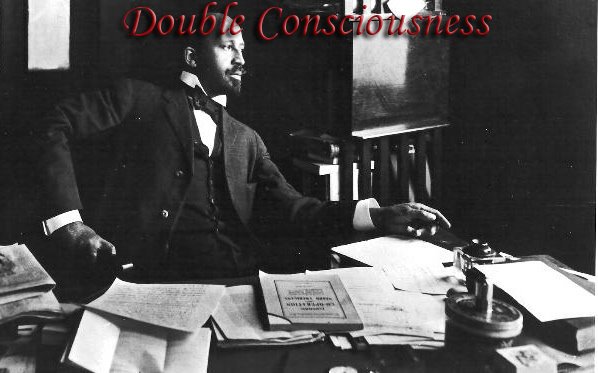
Just saw this on my friend Holly Bun's blog Three Girl Rhumba.
12.19.2007


12.16.2007
sunday night jam sessions
on the menu tonight:
dj drez feat rocky dawuni
saul williams
sade
ky-mani marley
wax poetic
chill out before the hectic week ahead.
always conscious lyrics
sunday night jam sessions

dj drez feat rocky dawuni
saul williams
sade
ky-mani marley
wax poetic
chill out before the hectic week ahead.
always conscious lyrics
sunday night jam sessions
12.14.2007
The Struggle Against the Brahmin/The Struggle Against the White Man: Inter-Connectivity Between India/U.S. Struggles
Cross-posted from Blogbharti.
I was recently invited by my (blogger) friend Kuffir to blog for Blogbharti in their Spotlight Series, an Indian blog aggregator, whose stated mission is to make sure that "all voices from the Indian blogosphere are properly heard." Kuffir, from Hyderabad, India, is an editor at Blogbharti and also blogs here. I was very honored he invited me (along with others) to blog about a topic of my liking. So I decided to blog about the similarities between the Dalit struggle and the struggles of people of color in the United States; as well as on the privileges and ignorances of whites and Brahmins in the United States and India and the system that keeps them up and keeps "the other" down. For those of you in America and abroad you can read more about Dalit issues on my blog here and here and as well as clicking on the "Dalit" tag and "Caste" tag at Blogbharti.
I was recently invited by my (blogger) friend Kuffir to blog for Blogbharti in their Spotlight Series, an Indian blog aggregator, whose stated mission is to make sure that "all voices from the Indian blogosphere are properly heard." Kuffir, from Hyderabad, India, is an editor at Blogbharti and also blogs here. I was very honored he invited me (along with others) to blog about a topic of my liking. So I decided to blog about the similarities between the Dalit struggle and the struggles of people of color in the United States; as well as on the privileges and ignorances of whites and Brahmins in the United States and India and the system that keeps them up and keeps "the other" down. For those of you in America and abroad you can read more about Dalit issues on my blog here and here and as well as clicking on the "Dalit" tag and "Caste" tag at Blogbharti.
Trying to jog my brain on what to write I decided to flip back to my old posts on caste, especially my two posts on Dalits and Hinduism. One thing that struck me was the similarities of caste and whiteness; specifically on not seeing one's own privilege as an upper caste Hindu or as a white person. One thing whites have done in America is try to co-opt movements from people of color and try to make them their own or try to co-opt them by trying to enfold certain leaders from communities of color into the mainstream political fold so only cosmetic changes are done and no real change happens. The main political parties are still run by white males with their token people of color mixed in but the reality is, is that these parties are still guided by white elites and essentially only represent the interests of white elites; which in turn shows us why there was never really any big change in the American racial landscape after the civil rights bills of the 1960s.
So too for the Congress Party of India, which for a long time was really the only political party that had control of the Indian government. While Gahndi and the Congress Party claimed to represent the interests of India and to be for all Indians in reality the Congress Party was actually run by upper caste men; while, even though many of whom were more "liberal" minded when it came to religion, they still enjoyed the benefits of caste. Many in the Congress Party, including the bourgeois and upper caste Gandhi, were unaware of the caste privilege and in fact even lauded the caste system as divinely inspired. This was meet with severe and harsh criticism by Dalit leaders such as Ambedkar (one just need look at the title of Ambedkar's book What Congress and Gandhi Have Done to the Untouchables).
Another similarity between caste and white supremacy is that both of these systems and institutions have been meet with both mainstream and more radical and militant resistance. In the United States (early one) in the civil righs movement whites and Blacks united to fight against Jim Crow laws, yet when it came time to really institute change in the U.S. many whites decided to back out and not confront their own white privilege; to them the civil rights legislation was enough and if Blacks couldn't make it then it was "their own damn fault." Liberal whites could "feel good" about helping their Black "brothers and sisters" but that didn't mean they actually viewed them as their equals. Instead those who called for radical change in the corrupt and unjust white supremacist system were Blacks and other people of color. They formed radical organizations that confronted whiteness and white supremacy, such as the Black Panthers and Brown Berets. It was people of color, not whites, who organized their communities and demanded real change and took militant stances in demanding equality for all and access to the vast abundance of wealth that was horded by the elite.
As in India it was not the Brahmins and upper cast Hindus who led for genuine reform, it was the Dalits. While many upper caste Hindus did seek to abolish "caste discrimination" they did not seek to abolish the caste system itself, just as whites were comfortable with seeking to ban Jim Crow laws but not white privilege itself. Ambedkar, who was a Dalit, was able to see in Gandhi and the Congress Party what they could not see in themselves because they were blind by their privilege. “Examine the Gandhian attitude to strikes,” stated Ambedkar, “the Gandhian reverence for caste and the Gandhian doctrine of Trusteeship of the rich…Gandhism is the philosophy of the well-to-do and leisured class.” Also it was radical Dalits in India who created the Dalit Panthers, in direct connection with the Black Panthers, and tackled the problem of caste head on and with no regrets.
So what does this mean for those in America who fight against white privilege and those in India who fight against the caste system and upper caste reactionaries? For one, in this highly globalized and technological world both sides can view each others triumphs, failures, writings, and thought in order to better themselves and their own struggles and in turn open up lines of communication between each other and two it meas Dalits and people of color can align themselves in a shared common struggle against capitalism and of destructive social systems so ingrained in each society that it is nearly impossible to think of said society without thinking of caste or white privilege and racism. Not only will it be beneficial to study both movements mutually, but in this globalized world both systems collide with each other and play out in other countries and spill over amongst themselves. One can't separate America's goal for domination of the globalized world with that of white supremacy and one can't deny that it is the elites in both countries (which Anand Patwardhan captured so well in his documentary War and Peace) who benefit from globalism and capitalism. Thus there is an inter-connectivity between privileged white males in Europe and America and privileged upper caste males in India. Thus there too must also be an inter-connectivity between people of color and immigrants in Europe and America and the Dalits, Shudras, and OBCs in India in order to combat this new conflation of oppression were both lower classes are left behind in the dust and left to suffer for the "betterment of the 'whole' society."
12.11.2007
The Invisibility of Whiteness
 As Jason Katz argues in the film Tough Guise: Violence, Media, & the Crisis in Masculinity, the way in which domination operates is that the dominant group is often rendered invisible and thus is unexamined. When we talk about race we normally think about African American, Latino, Asian; when we talk about sexual orientation we think homosexual, bisexual, transgender; when we talk about gender we think female. Rarely do we really look at the dominant group -- as if white isn't a racial category, as if heterosexual isn't a sexual orientation, and as if males don't have a gender. So if we're talking about racial issues specifically, part of what it means to be white is to not have your personal character flaws or actions attributed to your race.
A person example...
A couple of weeks ago in one of my sociology classes, the professor asked the class to define whiteness/white culture in the United States. Some of the characteristics that people listed were leisure, wholesome, and Brittney Spears. The professor then asked everyone to define Filipino culture. With relative ease, the class came up with a multitude of traits such as nurses, FOBs, gold diggers, lumpia, hard-working, family-oriented, and, according to one white woman's high school experience, Filipinos are seclusive.
It was then that I raised my hand and said, "I find it interesting that some of us look at Filipinos as seclusive, or self-segregating, and not whites, when whites are one of the most segregated racial groups [gated communities for example]. When we see a group of people of color we think 'Hey, they're sticking amongst each other. They're self-segregating.' But when we see a group of white people we think, 'Oh, those are just some people.' We don't talk about whites in racialized terms."
I also noticed how difficult it was for people in the class to define whiteness/white culture. In explaining as to why this might be so, Ruth Frankenburg, author of the book White Women, Race Matters: The Social Construction of Whiteness, argues that white culture is “invisible” because it is constructed as “normal.” Because whiteness is seen as the norm - as the standard against which all others are measured, "white culture has no definition, only those who deviate from the norm have ‘culture.’”
Interestingly enough as I was contemplating about what other examples I could use to illustrate this idea, I came across an article in the New York Times entitled, "Obama Pins Hopes on Oprah Factor in South Carolina." In it the writer states the following:
What the writer here implies is that Oprah's personality as well as her show are "race neutral" because most of her viewers are white. Likewise, Obama has opted for a more "universal" (meaning white) appeal. "Transcending race", according to the writer, means tailoring your image and persona so that it appeals to mostly white people -- as if whites do not belong to a racial group. Because both Oprah and Obama are now reaching out to blacks, their actions are viewed as racial.
Ms. Winfrey’s show and persona generally transcend race (the vast majority of her 8.6 million daytime viewers are white). Mr. Obama has tried to do the same with his campaign. But Sunday, Ms. Winfrey referred both directly and indirectly to what she called a “seminal moment” in the nation’s history. It was clear she was talking about the chance to elect the first black president.
If we are truly aspiring to achieve racial justice then we need to look at racism (and by that I mean a system of ideas embedded into our institutions which gives whites unearned advantages over people of color) as a white problem rather than just a problem that people of color face.
On (White) Feminism
Cross-posted from The Blog and the Bullet.
BrownFemiPower blogs about the book Full Frontal Feminism, on teaching it at university women’s studies classes, her own experience as a woman of color in such classes, and the overall arch of teaching feminism in general:
It’s time for all of us, but in particular, women’s studies departments, to stop pretending that these interactions between women of color and white women never happened or don’t count. It’s time to stop pretending that the voices of white women speaking about women of color is sufficient enough of a history for women of color. It’s time to stop pretending that universal agreement between women of color is necessary before white people can interact with an engage with a particular critique of women of color. It’s time to stop pretending that any critique by women of color exists within a timeless vacuum that demonstrates some ancient racism of a feminism from time past.
12.07.2007
Support A Free Democracy In Vietnam
Free Them Now.net
Activists, bot Vietnamese and American Are being held in jails indefinitely and need your support.
Here is the petition to sign
Activists, bot Vietnamese and American Are being held in jails indefinitely and need your support.
Here is the petition to sign
Subscribe to:
Posts (Atom)


